
The Story
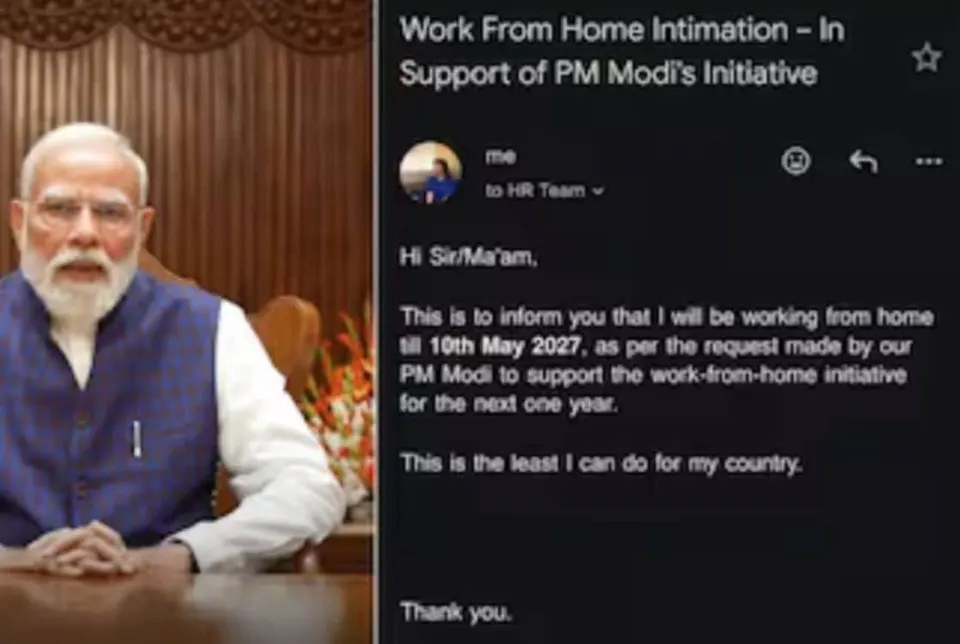
A screenshot of an email from an Indian employee to their HR department has gone viral, demanding a continuous work-from-home arrangement until May 10th, 2027. The justification provided in the email is entirely unconventional: the employee cites an appeal by Prime Minister Narendra Modi, positioning their remote work as a patriotic duty to "support the work-from-home initiative." Framing the refusal to return to the office as "the least I can do for my country," the incident quickly transcended social media humor to become a massive talking point across professional networks like LinkedIn. While the email is steeped in satire, it perfectly captures the underlying tension currently gripping the Indian corporate sector regarding workplace flexibility.
Why It Matters
The core strategy behind this viral resistance stems from a massive disconnect between executive leadership and ground-level talent. Over the past twelve months, major Indian IT conglomerates and prominent startups, particularly those concentrated in congested hubs like Bengaluru and Gurgaon, have implemented strict return-to-office (RTO) policies. These mandates are often enforced through rigid attendance tracking and linked directly to variable pay and performance appraisals. However, employees have fundamentally adjusted their lives around remote work, recognizing the severe tax that two-to-three-hour daily commutes place on their productivity and mental bandwidth. By weaponizing a public statement from the Prime Minister—likely referencing broader government appeals for energy conservation or digital adoption—the employee effectively cornered HR. It is a highly defensive, narrative-driven tactic that exposes the lack of strategic logic in forcing knowledge workers back into physical cubicles simply for the sake of optical management.
The Strategic Read
This incident signals a broader, permanent shift in employee-employer power dynamics. Human resource departments in traditional Indian enterprises are structurally unprepared to handle decentralized, culturally resonant pushback from their workforce. When employees resort to citing national leaders to negotiate basic flexibility, it indicates a total breakdown in internal corporate trust and communication. For the broader industry, this means rigid, attendance-based performance metrics are becoming a major liability for talent retention. Competitors who offer asynchronous, output-driven remote environments will inevitably siphon top-tier talent away from legacy firms that insist on physical presence. Ultimately, companies will have to abandon the optical comfort of full offices and rebuild their management frameworks around actual business outcomes, rather than geographical control.
For daily, sharp analysis of the biggest moves in the Indian business and startup ecosystem, follow StartupFox.