
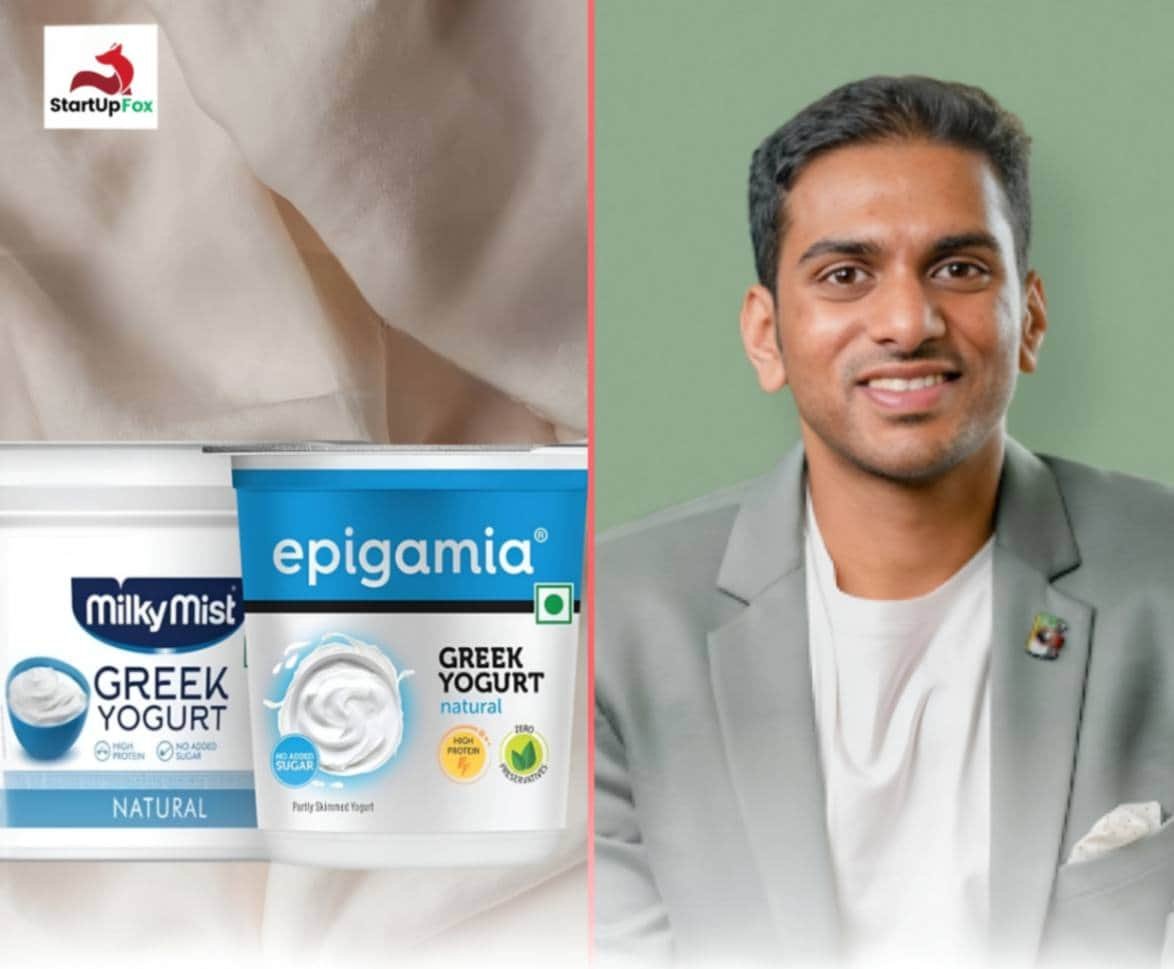
The ultimate proof of a startup's market impact is when a massive, legacy incumbent decides to copy its exact playbook. This shift was recently highlighted by V3 Ventures Co-Founder Arjun Vaidya, who shared a telling anecdote about the current state of consumer retail. After his family attempted to order Epigamia’s plain Greek yogurt via a quick commerce app, they accidentally purchased a remarkably similar product from Milky Mist. When Vaidya checked the refrigerator, he realized his eye had made the exact same mistake. Milky Mist, a corporate giant roughly five times the size of Epigamia, had replicated the specific blue-and-white visual identity and packaging format of the D2C challenger. Crucially, Vaidya points out that this isn't a simple private label play by a retailer; this is a massive, independent brand using its scale to intentionally mimic a startup's successful product positioning.
For Vaidya, this dairy mix-up is simply a micro-example of a massive, cyclical macro trend in Indian business. He points to historical parallels where agile startups forced sluggish incumbents to adapt or die. When Reliance Jio launched as a startup, it forced legacy telecom players like Airtel and Vodafone to completely replicate its aggressive pricing and data plans. Similarly, it took a challenger like Patanjali to mainstream Ayurvedic FMCG products before corporate heavyweights like Hindustan Unilever (HUL) decided to heavily invest in the category. Now, the same dynamic is playing out across sectors, right down to old-school luggage brands rushing to launch hard-shell, pastel-colored suitcases that look exactly like Mokobara. Vaidya argues that this is a clear signal from the market: consumers are desperate for something new, and legacy brands, realizing they lack the internal agility to invent these categories from scratch, are simply letting D2C founders do the expensive R&D before swooping in to clone the results.
The strategic question Vaidya poses to the ecosystem is one of survival and scale: what happens when the copycats arrive? He frames the upcoming battle as a clash between two distinct advantages. On one side is the incumbent's overwhelming distribution reach and ability to out-price the startup. On the other side is the challenger's ability to build genuine, structural moats that go far beyond packaging. If a D2C brand relies purely on aesthetics, it will lose to a cheaper clone. To survive, Vaidya suggests that founders must build proprietary supply chains, secure exclusive partnerships, and cultivate a community loyalty that cannot be replicated in a corporate boardroom. Despite the threat this poses to individual startups, Vaidya views this trend through an optimistic, investor-driven lens. When a legacy giant actively tries to build a Go Zero or Mokobara equivalent, it is a proud moment for the entire ecosystem, proving that Indian startups are fundamentally dictating the future of consumer demand.
For daily, sharp analysis of the biggest moves in the Indian business and startup ecosystem, follow StartupFox.