The Origin Story
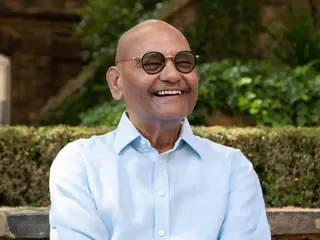
Anil Agarwal was not supposed to be a business story. He was a Marwadi boy from Patna, the son of a man who made aluminium conductors for a living. No degree, no connections, no English. At 19, he packed a tiffin box, rolled up his bedding, and boarded a train to Bombay — a city that owed him nothing and promised him less.
Why This Matters
He spent his first years in Bombay trading scrap metal — collecting cable waste from companies and selling it across the city. It was unglamorous, low-margin work. He tried nine different businesses over a decade. All of them failed. In 1976, he took a ₹50,000 loan from Syndicate Bank and acquired Shamsher Sterling Corporation, a small manufacturer of enamelled copper. He ran both businesses simultaneously for ten years, showing up on time to every meeting, carrying a calculator, never missing an appointment. He called it "chote kaam." Small work. The kind nobody notices until it compounds.
"If I were 20 today, I would focus on the small tasks rather than the big ones. It's the small tasks that open big doors."
— Anil Agarwal · StartupFox Spotlight · 2026The Strategic Takeaway
The turning point wasn't a bold acquisition or a boardroom bet. It was a simple observation: his business was being held hostage by the price of copper and aluminium. Every time raw material costs spiked, his margins collapsed. So he made one decision that changed everything — he would stop buying metals and start making them. In 1986, he built a factory to manufacture jelly-filled cables, which became the foundation of Sterlite Industries. From there, he moved vertically — into copper refining, then zinc, then aluminium, then oil. In 1990, Sterlite became the first private company in India to refine copper. In 2003, Vedanta Resources became the first Indian company ever listed on the London Stock Exchange.
Where They Are Now
Today, Vedanta Resources spans zinc, copper, aluminium, iron ore, oil and gas across India, Africa, and Australia — a $35 billion+ investment footprint built from a ₹50,000 bank loan and a scrap metal route in Bombay. Anil Agarwal's personal net worth stands at $4.2 billion. None of it came from a grand strategy. It came from not missing an appointment. For India's next generation of founders — especially those without pedigree, degrees, or capital — the Agarwal story carries one uncomfortable truth: consistency, compounded over decades, beats brilliance every single time.
For daily, sharp analysis of the biggest moves in the Indian business and startup ecosystem, follow StartupFox on LinkedIn →